
VPN for IPTV Canada users are increasingly asking one important question in 2026: do you really need a VPN to stream safely and reliably?
As IPTV continues to replace traditional cable TV across Canada, concerns about privacy, security, and streaming stability are growing. While some believe a VPN is only useful for bypassing geo-restrictions, its real value goes much further. A VPN can protect your data, reduce throttling, and help you enjoy IPTV with greater peace of mind.
This guide explains when a VPN is necessary, when it isn’t, and how Canadian IPTV users can make informed decisions for secure and smooth streaming.
Table of Contents
Why Privacy Matters for IPTV in Canada
When you stream IPTV without protection, your internet service provider (ISP) can see your activity. This includes:
- What content you watch
- How long you stream
- How much bandwidth you use
In some cases, ISPs may throttle heavy streaming traffic during peak hours, which can lead to buffering and poor quality. Canadian telecom policies are regulated by the Canadian Radio-television and Telecommunications Commission (CRTC):
https://crtc.gc.ca
There is also the risk of using IPTV services that rely on unsecured servers, exposing your data to interception or misuse.
A VPN encrypts your internet traffic and hides your IP address, ensuring that your viewing habits remain private and protected.
What a VPN Actually Does for IPTV
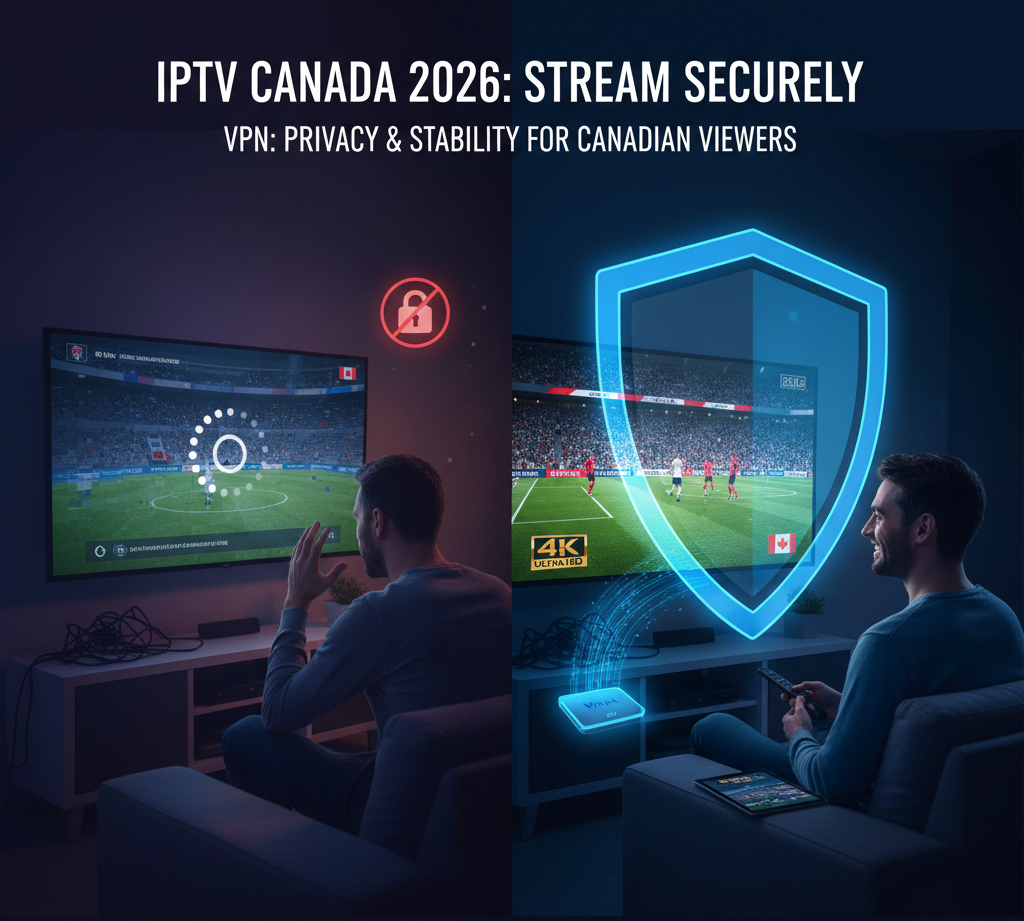
A VPN (Virtual Private Network) creates a secure tunnel between your device and the internet. For IPTV users in Canada, this means:
- Your real location is hidden
- Your traffic is encrypted
- Your ISP cannot easily monitor IPTV usage
- Public Wi-Fi connections become safer
- Geo-restricted channels become accessible
In 2026, modern IPTV security in Canada services are designed to handle HD and 4K streaming with minimal speed loss when configured correctly.
Main Benefits of Using a VPN for IPTV streaming
1. Stronger Privacy Protection
Without a VPN, your streaming behavior is visible to your ISP. A VPN prevents this by masking your IP address and encrypting your data.
2. Better Security
Some IPTV platforms operate on shared or public servers. A VPN reduces the risk of hacking, data interception, and unwanted access to your device.
3. Access to International Content
Many IPTV channels are limited by region. A VPN allows you to access sports, news, and entertainment from other countries.
4. Reduced Throttling
Encrypted traffic is harder for ISPs to classify, which may help reduce speed throttling during peak hours.
5. More Stable Streaming
By routing through optimized servers, a VPN can sometimes improve connection consistency and reduce buffering.
When You May Not Need a VPN
A VPN is useful, but not always required. You may not need one if:
- You only use licensed IPTV services in Canada
- You stream exclusively on your private home network
- You do not access international channels
- Your ISP does not throttle video traffic
However, most independent IPTV services benefit from VPN protection, especially when privacy and stability are priorities.
How to Choose the Right VPN for IPTV
Not all VPNs are suitable for IPTV streaming. The best VPN for IPTV streaming should offer:
High Speed
Streaming requires fast servers to avoid buffering. You can test your internet speed using:
https://www.speedtest.net
Wide Server Coverage
Choose a VPN with servers in Canada, the U.S., and Europe.
Strong Security
Look for encryption and a no-logs policy.
Device Compatibility
Your VPN should work with:
- Smart TVs
- Android TV boxes
- Firestick
- iOS and Android phones
- Windows and Mac
Reliable Protocols
Protocols like OpenVPN and WireGuard offer a balance between speed and security:
https://openvpn.net
How to Assess Your IPTV Needs
Before deciding on a VPN, ask yourself:
- Do I watch international sports or channels?
- Do I experience buffering at peak hours?
- Do I stream on public Wi-Fi networks?
- Do I use multiple devices for IPTV?
If the answer is yes to any of these, using a VPN is strongly recommended.
VPN vs Smart DNS
Some users consider Smart DNS instead of a VPN. Here is the difference:
| Feature | VPN | Smart DNS |
|---|---|---|
| Encryption | Yes | No |
| Privacy | High | Low |
| Geo-unblocking | Yes | Yes |
| Security | Strong | Weak |
| Speed | High | Very high |
Smart DNS is faster but offers no protection. A VPN provides full privacy and security.

Are Free VPNs Safe for IPTV?
Free VPNs are not recommended for IPTV streaming. They often come with:
- Limited servers
- Slow speeds
- Data logging
- Ads and restrictions
- Blocks on streaming services
For HD or 4K IPTV, a paid VPN with streaming optimization is far more reliable.
Does a VPN Slow Down IPTV?
A VPN can slightly reduce speed because of encryption, but with a good provider:
- Speed loss is minimal
- Buffering may decrease
- Stability improves
Recommended minimum speeds:
- HD streaming: 10 Mbps
- 4K streaming: 25 Mbps
Legal Considerations in Canada
Using a VPN in Canada is legal. IPTV legality depends on whether the provider has broadcasting rights for its content. Canadian broadcasting laws are defined here:
https://laws-lois.justice.gc.ca/eng/acts/B-9.01/
A VPN does not make illegal streaming legal, but it protects your privacy and connection security.
Always choose IPTV providers that are transparent and stable, and avoid anonymous services that disappear quickly.
Getting Started Safely with IPTV in Canada
If you are researching IPTV options, platforms such as
https://iptvnearme.ca
help explain how IPTV services work in Canada, what devices are compatible, and what features to look for in a reliable subscription.
Once you select a trusted IPTV provider, combining it with a quality VPN creates a balanced setup for privacy, security, and uninterrupted streaming.
If you are ready to explore IPTV subscriptions designed for Canadian users, you can view available IPTV plans at:
https://iptvnearme.ca
Common Mistakes to Avoid
- Using free VPNs for HD streaming
- Choosing VPNs without Canadian servers
- Ignoring speed tests
- Forgetting device compatibility
- Believing “zero buffering forever” claims
Why VPN + IPTV Is a Long-Term Strategy
Many users regret switching between unstable IPTV services. The best IPTV solutions focus on:
- Infrastructure
- Customer support
- Secure connections
- Consistent updates
A VPN complements these services by protecting your data and helping maintain stable access over time.
Final Thoughts
In 2026, IPTV in Canada is no longer just about having more channels. It is about privacy, trust, and reliability.
A VPN is not mandatory for every user, but for those who care about security, international content, and smooth streaming, it becomes an essential part of the IPTV experience.
The smartest setup combines:
- A reliable IPTV provider
- A fast VPN
- Compatible devices
- Informed usage
Together, they create a secure and flexible entertainment solution for modern Canadian households.

IPTV and streaming expert with over 8 years of experience in the digital television industry.Specialized in IPTV technology, streaming protocols, and legal content distribution.Writes about everything you need to know to stream optimally via the internet — from apps and devices to subscriptions and regulations worldwide.